Bhagavad Gita Chapter 6 Summary: The Yoga of Self-Control
 Minutes to read.
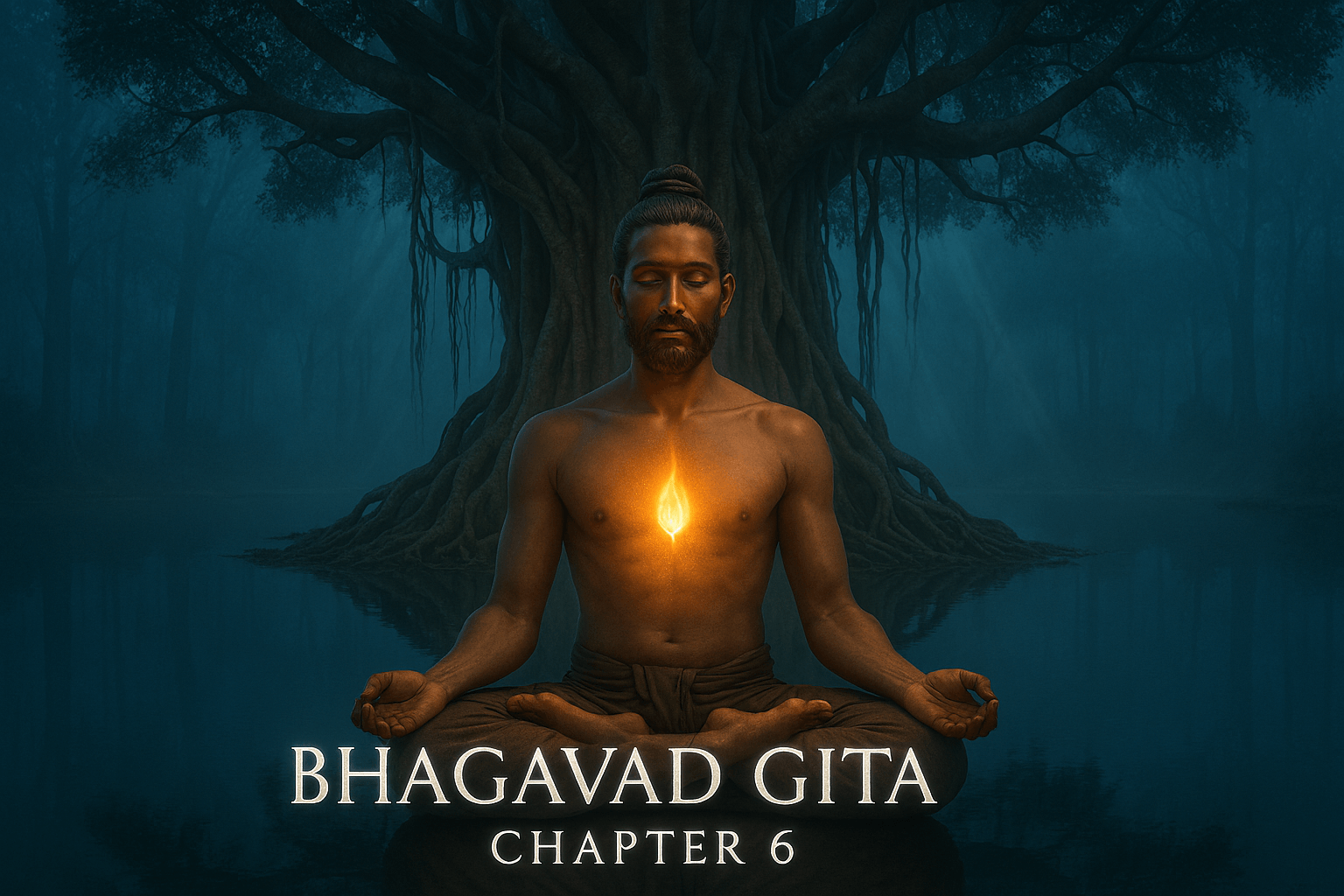
Bhagavad Gita Chapter 6 Summary: Meditation, Fasting, and Mind Control
Debunking the myths of Hatha Yoga and Fasting: Discover the "Middle Path" to attaining the Complete God.
Chapter 6 at a Glance (Key Takeaways)
- The Definition of a Yogi: A true Yogi is not one who merely abandons the "sacrificial fire," but one who performs their duty without seeking the fruits.
- Prohibition of Extremes: The speaker explicitly forbids fasting and excessive sleep for those seeking success in Yoga (Verse 16).
- The Mind as an Enemy: Why restraining the mind is as difficult as "restraining the wind" (Verse 34).
- The Fate of the Failed Seeker: What happens to a devotee who dies before achieving perfection?
I. Is Meditation (Dhyana) Enough for Liberation?
In Chapter 6, the speaker describes the process of sitting in a clean place, keeping the body erect, and focusing the gaze on the tip of the nose.
The Hidden Truth: While the speaker describes these yogic practices, he eventually labels the results of Samadhi and Hatha Yoga as momentary. This commentary highlights a critical contradiction: while the speaker suggests meditation, he later admits in Verse 46-47 that the "Bhakti Yogi" (the devotee) is superior to the "Tapasvi" (the ascetic performing penance).
II. The Prohibition of Fasting and Excessive Sleep
Many religious traditions promote fasting as a way to reach God, but Verse 16 states:
"Yoga is not possible for him who eats too much, nor for him who does not eat at all (fasts); nor for him who sleeps too much, nor for him who stays awake too much."
Key Insight: God-realization requires a balanced life. Those who torture their bodies through extreme fasting or staying awake for days are acting contrary to the Gita's injunctions. True spiritual practice is about the "Middle Path."
III. Restraining the Mind: "The Wind" Analogy
Arjuna raises a practical concern in Verse 34: "The mind is restless, turbulent, strong, and obstinate. I think it is as difficult to control as the wind."
The speaker agrees but suggests that it can be conquered through Abhyasa (practice) and Vairagya (detachment). However, as noted in the commentary, the mind can never be fully controlled by human effort alone. It requires the power of the Saarshabd (the Essential Word) given by a Tattvadarshi Saint to truly anchor the mind in the Supreme.
IV. What Happens if a Seeker Fails?
Arjuna asks a haunting question: "What happens to the man who has faith but lacks self-control, and wanders away from Yoga? Does he perish like a torn cloud?"
- The Reassurance: The speaker says no. A person who does good never meets an evil end.
- The Rebirth: Such a soul is born into the house of the righteous or the wealthy to continue their journey.
- The Limitation: The commentary points out that while this seeker isn't "destroyed," they are still trapped in the cycle of rebirth within Kaal's realm until they find the path to Satlok.
V. Who is the "Complete Yogi"?
In the final verse (Verse 47), the speaker reveals the highest truth of the chapter:
"And of all Yogis, he who worships Me with faith, his inner self merged in Me, him I deem to be the most devout."
The Deeper Analysis: This sets the stage for the next chapters. The speaker is moving Arjuna away from physical Yoga and toward exclusive devotion. But as we learn later, even this "devotion to Me (Kaal)" is inferior to the refuge of the Param Akshar Purush (Supreme God).
Frequently Asked Questions (FAQ) - Chapter 6
1. Does the Gita support fasting?
No. Verse 16 specifically states that Yoga is not for those who fast or eat too much. Spiritual success requires a regulated diet and lifestyle.
2. How can I control a restless mind?
While the Gita suggests practice and detachment, true control is achieved through Ajapa Jaap and the guidance of a Tattvadarshi Saint who understands the "breath of the soul."
3. Why is a Bhakti Yogi superior to a Hatha Yogi?
A Hatha Yogi focuses on the body and physical discipline, which are perishable. A Bhakti Yogi focuses on the internal connection with God, which leads to lasting spiritual fruit.
← Bhagavad Gita Chapter 5 Summary: The Yoga of True Renunciation Bhagavad Gita Chapter 7 Summary: Knowledge of the Divine and the Three Gunas →