Bhagavad Gita Chapter 16 Summary: The Divine and Demonic Nature
 Minutes to read.
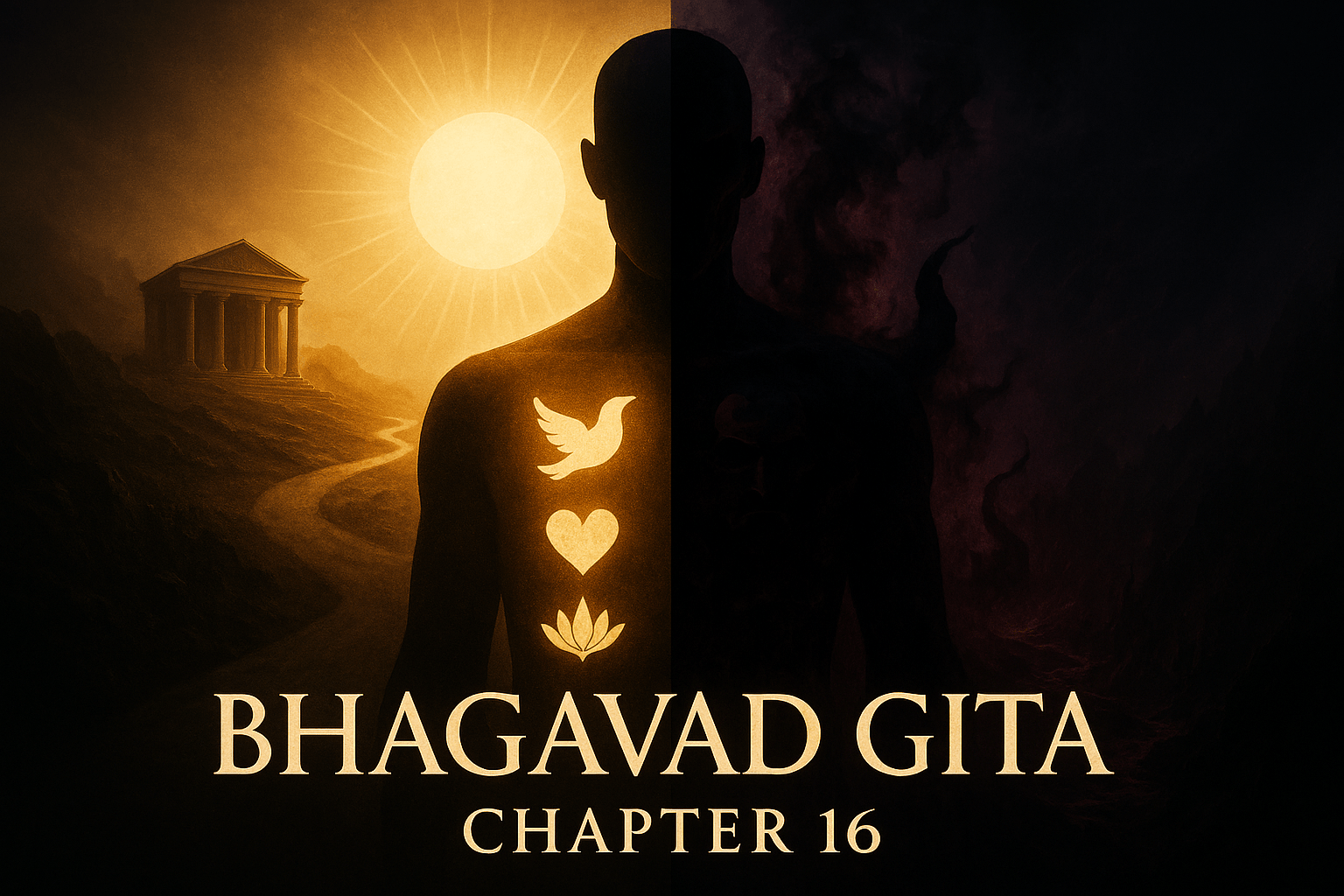
Bhagavad Gita Chapter 16: Divine vs. Demonic Nature & Verse 23
The Scriptural Law: Learn why arbitrary worship is labeled "Demonic" and the three gates that lead to hell.
Chapter 16 at a Glance (Key Takeaways)
- Divine Qualities: A list of 26 virtues (fearlessness, purity of heart, charity) that lead to liberation.
- Demonic Qualities: Attributes like hypocrisy, arrogance, and anger that bind the soul to the cycle of birth and death.
- The Trap of Atheism: The worldview of demonic people who believe the world is "without a God" and "unreal."
- The Final Commandment: Verse 23—the declaration that those who abandon the scriptures (Vedas/Gita) gain neither happiness nor the supreme goal.
I. The 26 Divine Virtues
The chapter begins with the traits of a soul destined for the Divine State (Devi Sampada).
- Key Virtues: Fearlessness, cleanliness of mind, steadfastness in knowledge, charity, control of senses, and non-violence.
- The Purpose: These qualities are "liberating" (Verse 5). They prepare the mind to receive the True Name from a Tattvadarshi Saint.
II. The Demonic Mindset: More Than Just Evil
In Verses 7–18, the speaker describes the "Demonic" (Asuric) nature. Most people think of demons as monsters, but the Gita describes them as:
- People who do not know what to do and what to refrain from.
- Those who say the world has no foundation and no God (atheists).
- Those who perform "showy" sacrifices (Yagyas) out of pride and vanity, contrary to scriptural rules.
The Hidden Truth: The site highlights that even "religious" people can be demonic if their method of worship is self-devised or follows man-made traditions instead of the Holy Scriptures.
III. The Three Gates to Hell
In Verse 21, the speaker identifies the three most dangerous enemies of the soul:
- Kama (Lust)
- Krodha (Anger)
- Lobha (Greed)
These are called the "Triple Gates of Hell" because they lead to the ruin of the soul. One who is free from these three can work toward their highest good.
IV. The Verdict on Arbitrary Worship (The SEO Power-Verse)
The climax of Chapter 16 is Verse 23, which is a pillar of authority on worship.
"He who, casting aside the injunctions of the Scriptures, acts under the impulse of desire, attains neither perfection, nor happiness, nor the Supreme Goal."
Key Insight: This verse invalidates 90% of modern religious practices that are not found in the Vedas or the Gita (such as worshipping idols of saints, ancestors, or arbitrary deities).
- If your worship is not "Vidhi-Vidhān" (according to scriptural law), it is useless.
- Verse 24 follows up: "Therefore, let the Scripture be your authority in determining what ought to be done and what ought not to be done."
V. The Fate of the Demonic Soul
The speaker warns that those who are envious and cruel are repeatedly cast into "demonic wombs" (lower life forms like dogs, pigs, and insects). They never reach the Supreme God and continue to suffer in the 21 universes of Kaal.
Your Evidence: Your commentary notes that the only way to "change one's nature" from demonic to divine is to surrender to a True Guru who can replace arbitrary rituals with the Scripture-based Way of Worship.
Frequently Asked Questions (FAQ) - Chapter 16
1. Who is a "Demon" according to the Bhagavad Gita?
A demon is not just a mythical creature. According to Chapter 16, anyone who lives for sensory pleasure, denies the existence of a Supreme Creator, and performs worship contrary to the scriptures is of demonic nature.
2. Why is arbitrary worship (Manmukh Bhakti) forbidden?
Verse 23 states that if you ignore the "rules of the scriptures" and do what you feel like, you will get zero spiritual benefit. You won't find peace in this life, nor will you achieve salvation after death.
3. What are the "Scriptures" mentioned in Verse 24?
In the context of the Gita, the primary scriptures are the Vedas and the Gita itself. Your site also includes the "Fifth Veda" (Suksham Veda/Kabir Vani) as the complete manual for worship.
← Bhagavad Gita Chapter 15 Summary: The Yoga of the Supreme Person Bhagavad Gita Chapter 17 Summary: The Yoga of Threefold Faith →